Jewish Burial Guide
Lehigh Valley & Reading
A starting point for a hard week, and a better one for a calm year. It does not rank or recommend. It says what is documented about each cemetery, what its office has confirmed directly, and what a family should still ask.
Scan to open it on your phone — every cemetery in this guide has its own code beside its listing.
If you are holding this today
In the first hours there are two decisions that must be made today and many that can wait. The order below is the order that spares a family the most.
The funeral home brings the deceased into their care, contacts the cemetery and the rabbi, arranges the chevra kadisha and a shomer, and knows what every office in this guide needs. If a hospital or hospice asks which funeral home, name a Jewish one; if the death was at home, the funeral home tells you whom to call.
The rabbi guides the family through the day, leads the service, and answers the questions about custom and law that come up in the hours ahead. If the family has no rabbi, the funeral home and the Federation's chaplaincy can find one.
If there is a family plot or a synagogue cemetery, say so; the funeral home confirms the space is available. If not, the cemeteries in this guide marked as selling to the public or confirmed by their office are the place to start, and the funeral home will call the offices for you. Take the time the family needs to choose well; the funeral home and the rabbi will tell you what timing is possible.
Jewish tradition favors burial soon after death, and funerals are not held on Shabbat or festivals. Within that, the funeral home proposes a time once the cemetery and rabbi are confirmed, and the family's needs — people travelling, a rabbi's availability — shape it. Your rabbi will guide you on what is right for your family.
The monument, the wording, the meal of consolation menu, the thank-you notes, the estate — none of it belongs to today. Ask one relative or friend to hold the list of what can wait, and to keep it away from the mourners.
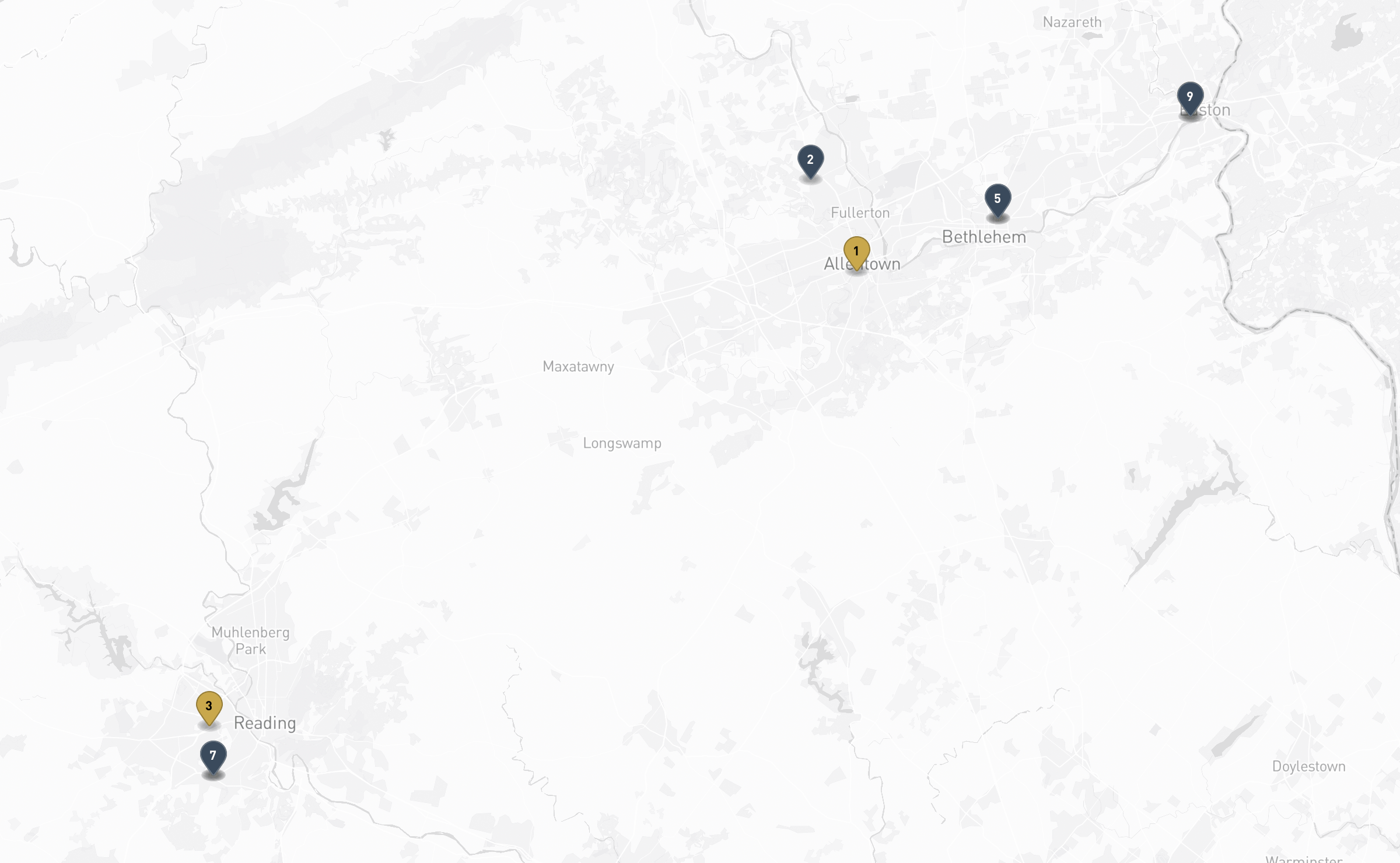
The area 9 cemeteries · 6 towns · numbers match the listings
How to read the listings
Each cemetery carries one of four labels, the same words used on everjewish.com. They describe how much has been confirmed — never quality, and never a ranking. Verification cannot change what a page says about a cemetery; it only adds the cemetery's own confirmed details.
Cemeteries by town nearest to Allentown & Reading first
Allentown, PA 14 mi from Allentown & Reading · 1 cemetery
& to ask the office
Whitehall, PA 14 mi from Allentown & Reading · 1 cemetery
& to ask the office
Wyomissing, PA 18 mi from Allentown & Reading · 1 cemetery
& to ask the office
Bethlehem, PA 20 mi from Allentown & Reading · 2 cemeteries
& to ask the office
& to ask the office
Shillington, PA 20 mi from Allentown & Reading · 2 cemeteries
& to ask the office
& to ask the office
Easton, PA 28 mi from Allentown & Reading · 2 cemeteries
& to ask the office
& to ask the office
After the burial the year that follows, and where the community is
The weeks after a funeral are when a family most needs the community and least knows where it is. The moments below come in order; the synagogue, the funeral home and the rabbi can name the community's chevra kadisha, bereavement groups and shiva help for each of them.
Six questions for the week itself
Short enough to ask on the phone; the funeral home will ask most of them for you.
Planning ahead for the calm year, not the hard week
Most people first look at a cemetery in the worst week of their lives. A few questions asked calmly, years early, spare a family the hardest decisions at the hardest time.
Where. Is there a family plot, a synagogue cemetery that comes with membership, or a community cemetery selling to the public? Availability changes; a cemetery that was open a decade ago may be pre-sold only today.
Who may be buried there. Membership rules, interfaith policy, and section restrictions are the questions families most often discover too late. They are also the ones cemetery offices answer readily when asked in advance.
What the purchase actually conveys. A deed or a right of interment; whether it can be transferred, sold back, or passed to children; and what the cemetery does if the family moves away.
Costs, in writing. A plot, the opening and closing, perpetual care, the monument and its setting fee are usually separate lines. Ask for them together, on paper, from the cemetery and from the funeral home; ask whether the price is fixed once paid.
Perpetual care. Who maintains the grounds when the society that founded the cemetery is gone, and whether a fund exists for it. Small cemeteries deserve this question most.
The funeral home's Jewish practice. Tahara and a chevra kadisha, a shomer overnight, tachrichim and a kosher casket, what happens on Shabbat or Yom Tov, transport to Israel if that is the wish.
Write it down and tell someone. The cemetery, the deed or contract, the funeral home, the rabbi, and who to call first. Give a copy to the person who will actually make the calls.
Words you will hear
About this guide
EverJewish is an independent reference of Jewish cemeteries and funeral homes across the United States. Listings are compiled from public sources and from what cemetery offices confirm directly; each entry says which. Nothing here is ranked, recommended, or paid for. Corrections are always free.
Questions of Jewish law and custom belong with your rabbi. Availability, eligibility and costs belong in writing from the cemetery and the funeral home.
This guide may be copied and distributed in full, unaltered, for community use. To correct a listing or reach EverJewish, scan the code: everjewish.com/contact.